
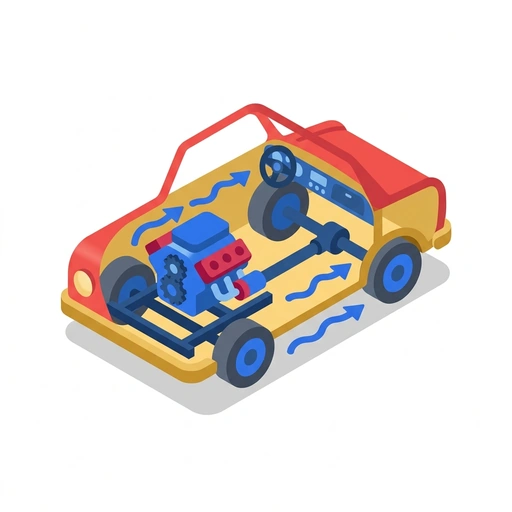
How Cars Work
Demystify what happens beneath the hood and behind the dashboard. Learn how engines, transmissions, and brakes operate, how to spot warning signs before they become costly breakdowns, and how to make confident decisions as an owner.
Like Duolingo, but for How Cars Work. Tomo turns the whole topic into a game you play five minutes a day, until it actually sticks.
21 levels across 3 sections, about 42 minutes end to end, roughly 8 days at five minutes a day. It moves through Confidence Under the Hood and Behind the Wheel, How the Machine Moves and Stops, and Troubleshooting and Smart Ownership. It starts from scratch.
Free forever · No credit card · iPhone & Android

Key ideas in How Cars Work
- Dashboard alert severity mirrors standard traffic light color logic
- Red dashboard lights mean immediate danger to the car or passengers that requires stopping right away
- Yellow or amber lights act as warnings that need attention soon without requiring an instant roadside stop
- The horseshoe with an exclamation mark is the tire pressure warning light
- Modern radial tires can be dangerously underinflated well before they visibly look flat to the naked eye
- Driving on low tire pressure ruins fuel economy and makes car handling sluggish and unsafe
- A temperature gauge in the red means coolant can no longer protect the engine from extreme heat
- Continuing to run an overheating car engine can warp metal parts and destroy the engine block in just a few minutes
- An overheating alert demands pulling over safely and shutting the engine off right away
- A steady check engine light flags a general emissions or sensor issue that can be diagnosed later
- A blinking or flashing check engine light indicates an active misfire dumping unburned fuel into the exhaust
- A flashing check engine light requires pulling over because it can quickly melt or destroy the catalytic converter
- The dashboard fuel icon features a small triangle or arrow alongside the pump symbol
- The arrow points directly toward the side of the car where the fuel tank door is located
- A car must be parked on flat ground so oil settles evenly in the pan
- The first pull only shows splashed oil, so the stick must be wiped clean and re-dipped
You've tried the other tabs
Thirty open tabs. Four facts you actually kept.
You watched. You nodded. By Sunday it was gone.
One answer, then back to scrolling.
Eight weeks. You meant to finish. You didn't.
Tomo gives How Cars Work the Duolingo treatment: levels, streaks, and quick quizzes that test what you just learned. That game loop is what the tabs above never had, so it's the one you actually finish.
Here's what playing it feels like
A real question from this course. Take your best guess.
What system does your car's dashboard borrow to show how urgent a warning light is?
Get it right to open this lesson and 20 more in the app.
How to learn How Cars Work, step by step
Go in order. 21 short levels across 3 sections, about 42 minutes in all, five minutes a day.
- 1
Confidence Under the Hood and Behind the Wheel
- Decoding Dashboard Alerts and Quick Triage
- Essential Under-Hood Checks
- 2
How the Machine Moves and Stops
- The Engine: Turning Fuel into Motion
- Transmissions and Drivetrains: Directing the Power
- Tires, Brakes, and Suspension: Staying on the Road
- 3
Troubleshooting and Smart Ownership
- Diagnosing Sounds, Smells, and Sensations
- Maintenance Strategies and Choosing Your Next Car
3 sections · 7 units · 21 levels. Built to play, not to enroll.
Questions about How Cars Work
How do I learn How Cars Work?
Go in order: start with Confidence Under the Hood and Behind the Wheel, then How the Machine Moves and Stops, then Troubleshooting and Smart Ownership. On Tomo that's 21 short levels, about 42 minutes in all, played five minutes a day. Start free and play the first level in under a minute.
Is there a Duolingo-style app for How Cars Work?
Yes. Tomo works like Duolingo: short daily lessons, streaks and quick quizzes. How Cars Work is one of its free courses, and you can type any other topic to get a course of your own.
Is the How Cars Work course free?
Yes. How Cars Work is playable on Tomo's free plan, which doesn't expire. No credit card, no waitlist. Download the app and start your first lesson.
How long does it take to learn How Cars Work?
21 levels across 3 sections, about 42 minutes of play in total. It's built for five minutes a day, so you finish it a little at a time instead of all at once.
Do I need any background to start How Cars Work?
No. It's pitched at a beginner level, so it starts where you are and builds up. If you can tap a phone, you can start.
Tomo is in ChatGPT
Tomo is also a ChatGPT plugin: the same playable courses, built and played inside your chat.
Add Tomo to ChatGPT- What to ask
- “Make me a Tomo course on black holes.” “Turn this chat into a Tomo course.”
- What you get
- Quick questions with instant feedback, hearts and stars, ready to play in about a minute.
- Where it goes
- No sign-up to start. Connect your Tomo account and your streak carries on in the app.
You pick the voice
How Cars Work is taught in the Bestie style: your friend who just gets it. Want a different feel? In the app you can spin up the same topic in any of Tomo's teaching styles. Same facts, totally different vibe.
More Technology on Tomo
Everyday Car Mechanics
Demystify what happens under your car's hood with practical, hands-on knowledge. Learn how to check vital fluids, diagnose weird noises, understand core engine systems, and deal honestly with mechanics.

Everyday Artificial Intelligence
Learn how modern AI models actually work and how to steer them effectively. Discover how to get reliable results, spot hallucinations, and pick the right tool for any task.
Everyday Car Mechanics
Demystify what happens under the hood. Learn to spot early warning signs, check vital fluids, and understand the core mechanical systems that keep your vehicle running safely.
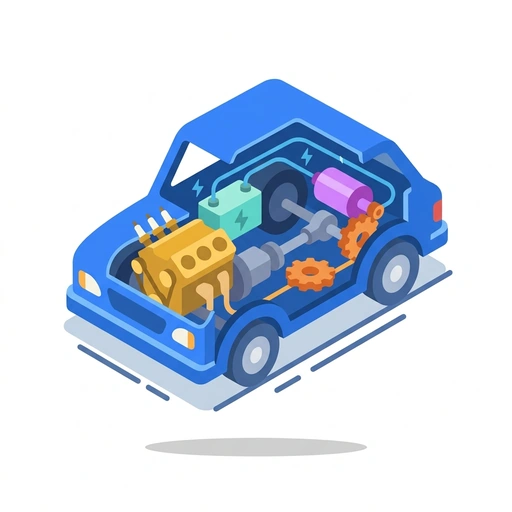
How Cars Work
Discover what happens beneath the metal when you press the pedal, turn the wheel, or charge up. Explore the mechanical gears, electric powertrains, and computer reflexes that move modern automobiles.
Car Mechanics and Everyday Upgrades
Understand how cars work from the engine bay to the wheels, and learn the essential logic behind modifying them for speed, sound, and handling.
How Engines and Turbos Work
Discover how cars turn droplets of fuel and gulps of air into rotational wheel power. Follow the path of combustion through pistons and crankshafts, then see how turbochargers harvest waste exhaust to create effortless boost.
Start How Cars Work today.
Download Tomo, search How Cars Work, and play your first lesson in under a minute.