
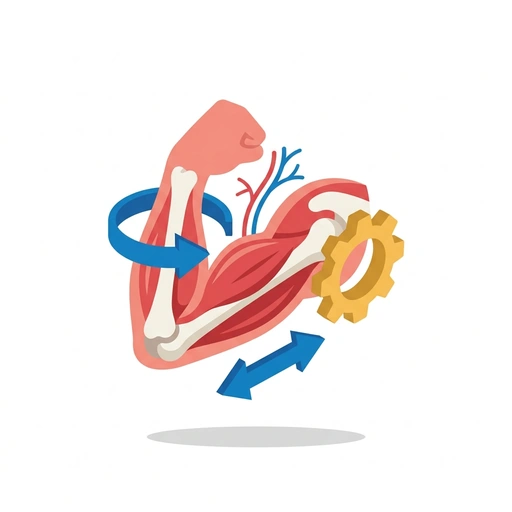
Biomechanics and Exercise Physiology
Understand how the human body generates force, stabilizes joints, and fuels athletic output. Connect structural anatomy to real-world movement mechanics and cardiorespiratory energy systems.
Like Duolingo, but for Biomechanics and Exercise Physiology. Tomo turns the whole topic into a game you play five minutes a day, until it actually sticks.
26 levels across 3 sections, about 52 minutes end to end, roughly 10 days at five minutes a day. It moves through Force, Levers, and Joint Torque; Musculoskeletal Anatomy in Action; and Bioenergetics and Systemic Adaptation. It assumes you already know the basics.
Free forever · No credit card · iPhone & Android
Key ideas in Biomechanics and Exercise Physiology
- In third-class levers, the muscle effort inserts between the joint fulcrum and the external load
- Third-class levers have a mechanical advantage below 1, requiring high muscle force for light loads
- The anatomical tradeoff maximizes limb tip velocity and angular range of motion for small contractions
- The external moment arm is the horizontal distance from the joint axis to the vertical gravity vector
- With the arm straight down, the weight line passes directly through the shoulder axis (near zero moment arm)
- At 90 degrees abduction, the dumbbell is farthest horizontally from the shoulder, maximizing torque demands
- Long femurs push the pelvis further backward to maintain center of mass over the midfoot
- A more forward-inclined torso increases the horizontal distance between the barbell and the hip joint
- A longer external moment arm demands greater hip extensor torque to lift the identical bar weight
- Placing the bar lower on the back forces more forward torso lean, lengthening the hip moment arm
- Elevating heels allows greater forward knee translation, extending the knee's external moment arm
- Sumo stance brings the hips closer horizontally to the barbell in the sagittal plane, shortening hip moment arm
- A sticking point occurs where external resistive torque exceeds the net internal joint torque capacity
- Just above the chest, the forearm angle and bar path create peak horizontal distance from the shoulder axis
- Muscle torque capacity drops mid-lift due to shifting internal moment arms and sarcomere overlap lengths
- Torque equals the applied load multiplied by the perpendicular distance from the joint axis to the line of force.
You've tried the other tabs
Thirty open tabs. Four facts you actually kept.
You watched. You nodded. By Sunday it was gone.
One answer, then back to scrolling.
Eight weeks. You meant to finish. You didn't.
Tomo gives Biomechanics and Exercise Physiology the Duolingo treatment: levels, streaks, and quick quizzes that test what you just learned. That game loop is what the tabs above never had, so it's the one you actually finish.
Here's what playing it feels like
A real question from this course. Take your best guess.
Where does the muscle attach relative to the joint and load in a third-class lever?
Get it right to open this lesson and 25 more in the app.
Where Biomechanics and Exercise Physiology takes you
- 1
Force, Levers, and Joint Torque
- Levers and Moment Arms in Exercise
- Torque, Resistance Curves, and Lines of Pull
- 2
Musculoskeletal Anatomy in Action
- Joint Architecture and Kinematics
- Multi-Joint Muscle Dynamics
- Spinal Mechanics and Trunk Stabilization
- 3
Bioenergetics and Systemic Adaptation
- Energy Pathways and Metabolic Flux
- Cardiorespiratory Gas Transport Under Load
- Fatigue Mechanisms and Tissue Remodeling
3 sections · 8 units · 26 levels. Built to play, not to enroll.
Tomo is in ChatGPT
Tomo is also a ChatGPT plugin: the same playable courses, built and played inside your chat.
Add Tomo to ChatGPT- What to ask
- “Make me a Tomo course on black holes.” “Turn this chat into a Tomo course.”
- What you get
- Quick questions with instant feedback, hearts and stars, ready to play in about a minute.
- Where it goes
- No sign-up to start. Connect your Tomo account and your streak carries on in the app.
You pick the voice
Biomechanics and Exercise Physiology is taught in the Professor style: clear, structured, thorough. Want a different feel? In the app you can spin up the same topic in any of Tomo's teaching styles. Same facts, totally different vibe.
More Health on Tomo
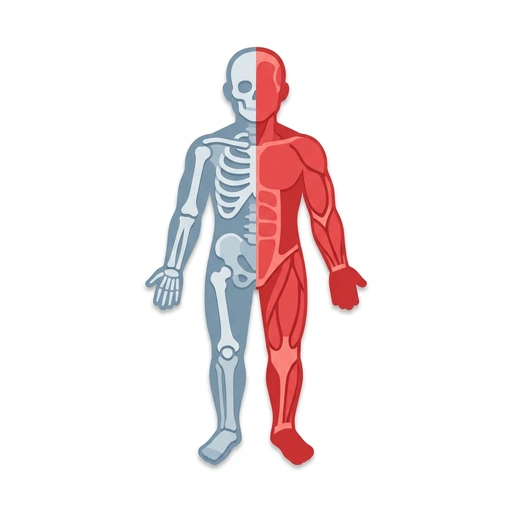
Musculoskeletal Anatomy in Motion
Bridge the gap between memorizing bone names and understanding how the living body generates force and stabilizes joints. Explore the mechanical levers, dynamic force couples, and tissue adaptations that govern human movement and physical resilience.
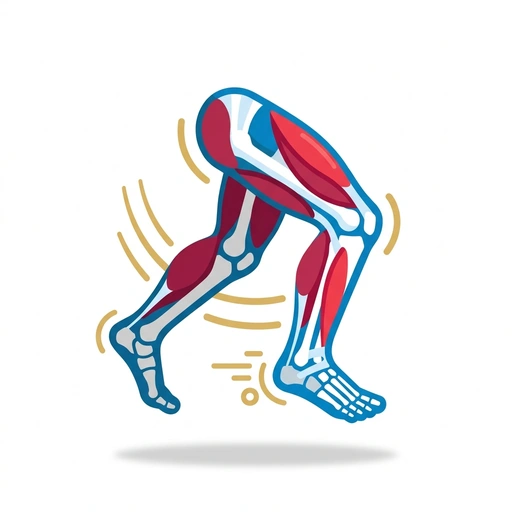
Functional Anatomy in Motion
Move beyond static muscle charts to understand how bones, joints, and myofascial systems coordinate real human movement. Learn how kinetic chains transfer force, why joint centration protects tissues, and how to spot subtle movement compensations in action.
Pilates Biomechanics and Anatomy
Understand the musculoskeletal machinery and physiological reflexes that power Pilates. Learn how joint mechanics, myofascial slings, and spring physics transform classic exercises from rote choreography into targeted physical conditioning.
Human Movement and Vitality
Explore the intricate machinery of the human body, from the physics of a perfect squat to the cellular chemistry of the food you eat.
Anatomy and Physiology in Action
Learn how the human body responds and adapts during physical exertion, acute stress, and injury. Understand the mechanics behind breathing, joint stability, thermoregulation, and vital reflexes to read physical signals and make informed decisions in real-time situations.
Functional Anatomy for Physical Therapy
Understand how muscles, bones, nerves, and joints collaborate to produce healthy movement and recover from injury. Learn the essential anatomical structures and physiological healing principles that guide real-world rehabilitation exercises.
Start Biomechanics and Exercise Physiology today.
Download Tomo, search Biomechanics and Exercise Physiology, and play your first lesson in under a minute.