
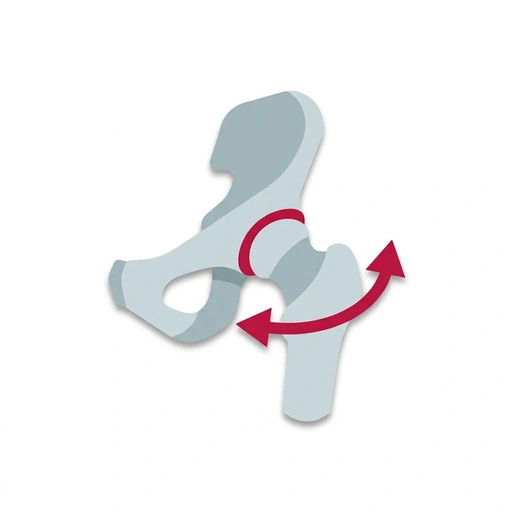
Functional Anatomy: Architecture of Motion
Look past static organ charts to understand how the human body balances force, fluid, and stability. Learn how joints glide, fascia routes tension, and body cavities generate hydraulic strength.
Like Duolingo, but for Functional Anatomy: Architecture of Motion. Tomo turns the whole topic into a game you play five minutes a day, until it actually sticks.
A short one: 12 levels across 2 sections, about 24 minutes end to end, roughly 5 days at five minutes a day. It moves through Bones, Joints, and Force Transmission and Cavities, Pressures, and Conduits. It assumes you already know the basics.
Free forever · No credit card · iPhone & Android
Key ideas in Functional Anatomy: Architecture of Motion
- The deep acetabulum encloses over half of the femoral head to provide passive skeletal containment
- The shallow glenoid fossa covers barely a third of the humeral head, favoring extreme range over bony locking
- High bony congruence gives inherent skeletal stability but limits angular excursion
- Ligaments are dense, non-elastic collagen bundles engineered to act as tensile checkreins
- Ligaments arrest extreme excursions and guide articular paths rather than rebounding dynamically
- Stretching a ligament beyond its physiological limit produces plastic deformation rather than elastic recoil
- Osteokinematic swings require concurrent arthrokinematic roll and glide within the capsule
- When convex joint surfaces swing without gliding in the opposite direction, the bone rolls into impingement
- Capsular adhesions halt arthrokinematic glide, producing early mechanical jamming during limb motion
- Deep local rotators fire anticipatorily milliseconds before global prime mover muscles contract
- Local cuff co-contraction draws the articular surfaces together to center the joint axis
- Global prime movers only produce efficient limb acceleration once the local joint axis is dynamically secured
- Synovial fluid is non-Newtonian: its viscosity drops under steady low shear rates to lubricate gliding
- Rapid impact loads cause hyaluronic acid molecules to tangle, abruptly stiffening the fluid to absorb shock
- Prolonged rest causes thixotropic thickening, producing noticeable stiffness on initial motion
- Continuous sheets of investing deep fascia mechanically bind adjacent muscle bellies together
You've tried the other tabs
Thirty open tabs. Four facts you actually kept.
You watched. You nodded. By Sunday it was gone.
One answer, then back to scrolling.
Eight weeks. You meant to finish. You didn't.
Tomo gives Functional Anatomy: Architecture of Motion the Duolingo treatment: levels, streaks, and quick quizzes that test what you just learned. That game loop is what the tabs above never had, so it's the one you actually finish.
Here's what playing it feels like
A real question from this course. Take your best guess.
How much of the arm bone's ball does the shoulder's shallow glenoid fossa actually cup?
Get it right to open this lesson and 11 more in the app.
How to learn Functional Anatomy: Architecture of Motion, step by step
Go in order. 12 short levels across 2 sections, about 24 minutes in all, five minutes a day.
- 1
Bones, Joints, and Force Transmission
- Joint Architecture and Degrees of Freedom
- Kinetic Chains and Fascial Force Transmission
- 2
Cavities, Pressures, and Conduits
- Compartments and Neurovascular Pathways
- The Thoracoabdominal Pressure Engine
2 sections · 4 units · 12 levels. Built to play, not to enroll.
Questions about Functional Anatomy: Architecture of Motion
How do I learn Functional Anatomy: Architecture of Motion?
Go in order: start with Bones, Joints, and Force Transmission, then Cavities, Pressures, and Conduits. On Tomo that's 12 short levels, about 24 minutes in all, played five minutes a day. Start free and play the first level in under a minute.
Is there a Duolingo-style app for Functional Anatomy: Architecture of Motion?
Yes. Tomo works like Duolingo: short daily lessons, streaks and quick quizzes. Functional Anatomy: Architecture of Motion is one of its free courses, and you can type any other topic to get a course of your own.
Is the Functional Anatomy: Architecture of Motion course free?
Yes. Functional Anatomy: Architecture of Motion is playable on Tomo's free plan, which doesn't expire. No credit card, no waitlist. Download the app and start your first lesson.
How long does it take to learn Functional Anatomy: Architecture of Motion?
12 levels across 2 sections, about 24 minutes of play in total. It's built for five minutes a day, so you finish it a little at a time instead of all at once.
Do I need any background to start Functional Anatomy: Architecture of Motion?
No. It's pitched at an intermediate level, so it starts where you are and builds up. If you can tap a phone, you can start.
Tomo is in ChatGPT
Tomo is also a ChatGPT plugin: the same playable courses, built and played inside your chat.
Add Tomo to ChatGPT- What to ask
- “Make me a Tomo course on black holes.” “Turn this chat into a Tomo course.”
- What you get
- Quick questions with instant feedback, hearts and stars, ready to play in about a minute.
- Where it goes
- No sign-up to start. Connect your Tomo account and your streak carries on in the app.
You pick the voice
Functional Anatomy: Architecture of Motion is taught in the Professor style: clear, structured, thorough. Want a different feel? In the app you can spin up the same topic in any of Tomo's teaching styles. Same facts, totally different vibe.
More Science on Tomo
Functional Human Anatomy
Understand how the human body operates as an integrated mechanical and physiological system. Explore joint levers, vascular pressure gradients, organ compartmentalization, and deep neural wiring.
Human Anatomy: Built to Move
Discover the mechanical genius beneath your skin. Learn how your bones, muscles, lungs, and heart coordinate to move you through the world.
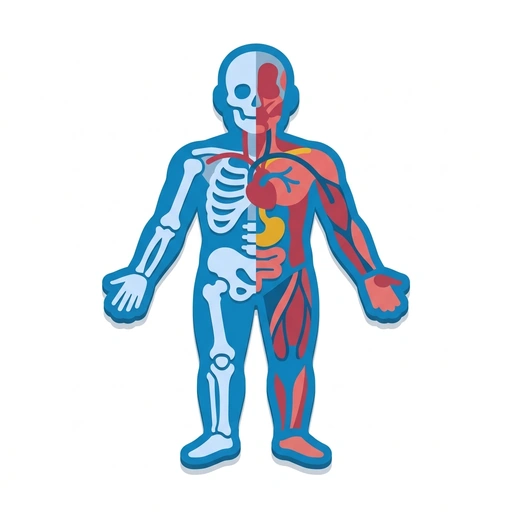
Human Anatomy: Form and Function
Bridge the gap between basic body parts and true functional anatomy. Discover how bones, muscles, nerves, and organs mechanically coordinate to sustain motion, regulate pressure, and maintain life.
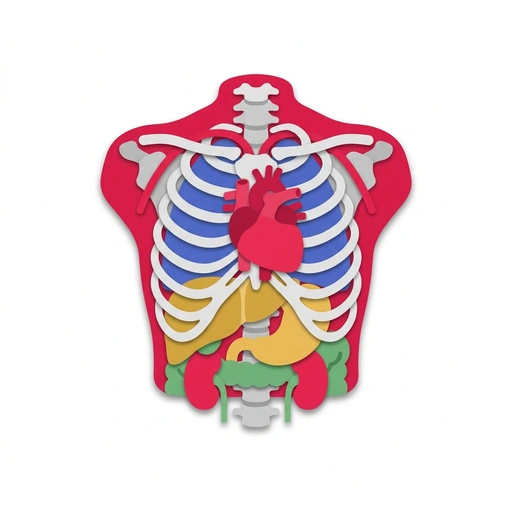
The Architecture of the Human Body
Understand how the human body really fits together, from bony landmarks and force-transmitting joints to visceral compartments and neurovascular routes.
How the Human Body Fits Together
Explore the elegant architecture of your own body from the inside out. Learn how your skeleton, muscles, circulation, and vital organs coordinate to keep you upright, moving, and alive.
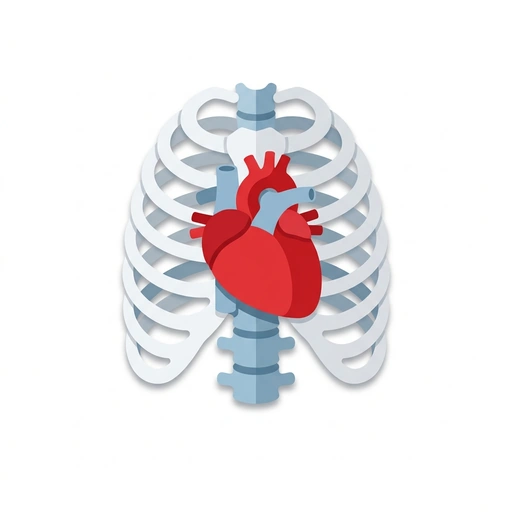
Applied Human Anatomy
Decode the architectural logic of the human body through topographical relationships, fascial planes, and systemic structural design. Move beyond simple memorization to understand how form governs function across every major system.
Start Functional Anatomy: Architecture of Motion today.
Download Tomo, search Functional Anatomy: Architecture of Motion, and play your first lesson in under a minute.