
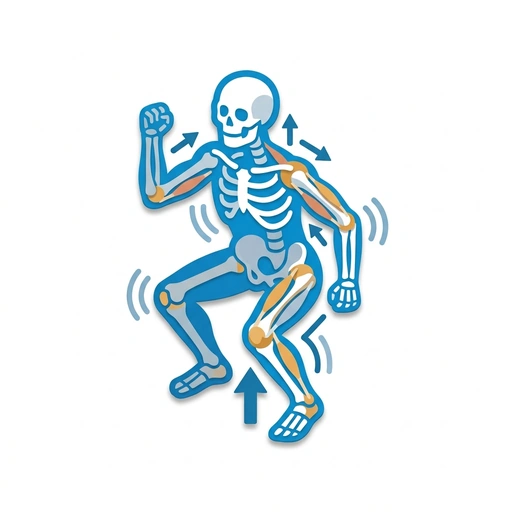
Functional Anatomy: How the Body Handles Force
Move past rote memorization of muscle names and discover the biomechanical architecture of the human body. Learn how moment arms, two-joint muscle dynamics, core hydraulics, and elastic fascia manage force and movement.
Like Duolingo, but for Functional Anatomy: How the Body Handles Force. Tomo turns the whole topic into a game you play five minutes a day, until it actually sticks.
A short one: 12 levels across 2 sections, about 24 minutes end to end, roughly 5 days at five minutes a day. It moves through Joint Leverage and Muscle Dynamics and Stabilization and Elastic Tissues. It assumes you already know the basics.
Free forever · No credit card · iPhone & Android
Key ideas in Functional Anatomy: How the Body Handles Force
- Third-class levers require more muscular effort than the load being moved.
- A short contraction produces large, rapid excursions at the distal limb.
- Skeletal architecture prioritizes movement speed and reach over raw force.
- The internal moment arm changes continuously as the angle of pull shifts.
- Leverage peaks near mid-range where the tendon pulls perpendicular to bone.
- Joint torque varies through the arc, forming a dynamic strength curve.
- The external moment arm is measured perpendicular from joint axis to load line.
- Extending a load further from a joint axis multiplies the rotational demand.
- A load aligned directly through a joint axis produces zero rotational torque.
- An upright torso moves the load closer to the hip, reducing hip moment arm.
- Forward knee travel pushes the knee joint further from the line of gravity.
- Torque redistributes to the quadriceps as knee external moment arm grows.
- The patella physically displaces the patellar tendon anterior to the joint axis.
- Greater distance from the axis increases the internal moment arm of the quadriceps.
- Bony protuberances reduce the muscular force needed to produce extension torque.
- Actin and myosin filaments over-overlap, leaving fewer available cross-bridge binding sites.
You've tried the other tabs
Thirty open tabs. Four facts you actually kept.
You watched. You nodded. By Sunday it was gone.
One answer, then back to scrolling.
Eight weeks. You meant to finish. You didn't.
Tomo gives Functional Anatomy: How the Body Handles Force the Duolingo treatment: levels, streaks, and quick quizzes that test what you just learned. That game loop is what the tabs above never had, so it's the one you actually finish.
Here's what playing it feels like
A real question from this course. Take your best guess.
Most joints in your body work as third-class levers. What does this mean for muscle effort?
Get it right to open this lesson and 11 more in the app.
Where Functional Anatomy: How the Body Handles Force takes you
- 1
Joint Leverage and Muscle Dynamics
- Moment Arms and Mechanical Leverage
- Multi-Joint Muscles and Movement Limits
- 2
Stabilization and Elastic Tissues
- The Hydraulic Core and Spinal Stability
- Fascial Tension and Elastic Energy
2 sections · 4 units · 12 levels. Built to play, not to enroll.
You pick the voice
Functional Anatomy: How the Body Handles Force is taught in the The Professor style: clear, structured, thorough. Want a different feel? In the app you can spin up the same topic in any of Tomo's teaching styles. Same facts, totally different vibe.
More Science on Tomo
Human Anatomy: Bones and Muscle
Move beyond memorizing muscle and bone names to understand how the human musculoskeletal system functions as an integrated mechanical machine. Learn how joints dictate movement, why muscles operate in coupled pairs, and how living tissue remodels under load.
Functional Human Anatomy
Bridge the gap between anatomical names and how the living body actually moves. Discover how bones, joints, muscles, and neural circuits collaborate to generate force and control motion.
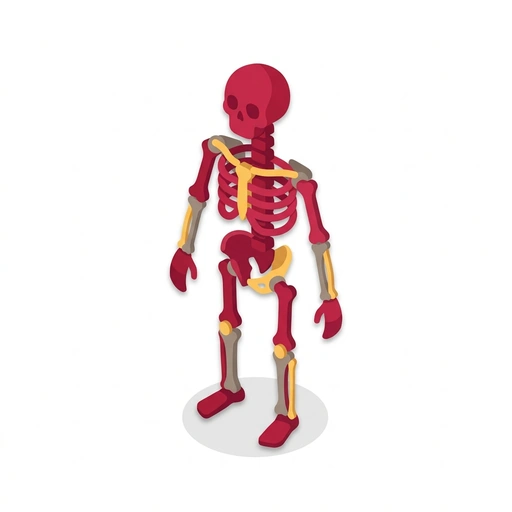
How the Human Body Fits Together
Explore the elegant architecture of your own body from the inside out. Learn how your skeleton, muscles, circulation, and vital organs coordinate to keep you upright, moving, and alive.
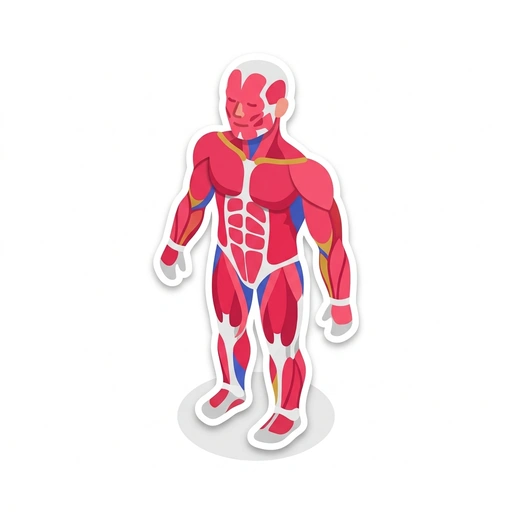
Human Muscle Anatomy
Discover how facial expressions, posture, and athletic movements actually work from the inside out. Learn the major muscle groups of the human body and the physiological mechanics behind every motion.
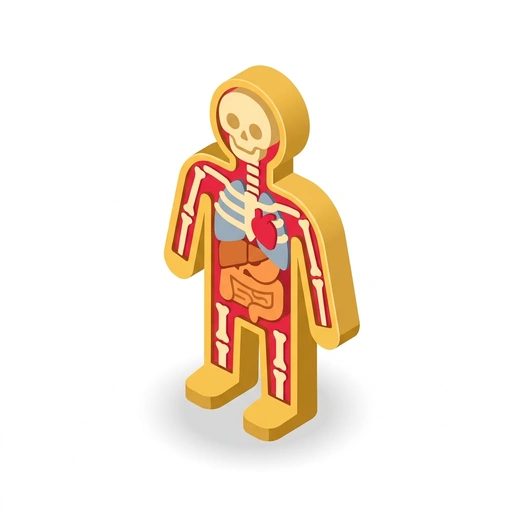
Anatomy of the Human Body
Discover how your bones, muscles, and internal systems coordinate every breath and step. Understand the physical machinery that powers daily movement, circulation, and sensation.
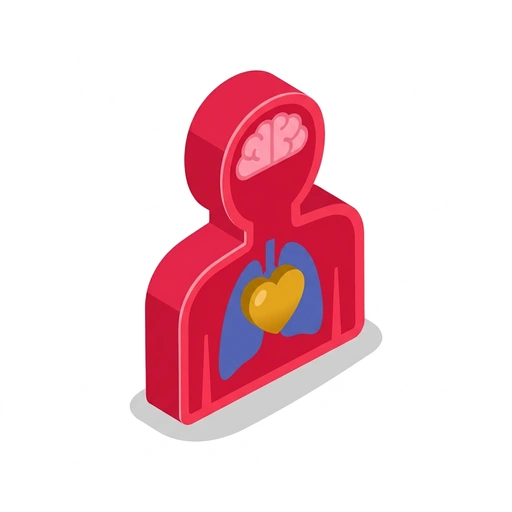
How the Human Body Works
Discover how your body coordinates movement, fuels your cells, and keeps you alive. Learn the mechanics behind everyday sensations from your heartbeat to muscle fatigue.
Start Functional Anatomy: How the Body Handles Force today.
Download Tomo, search Functional Anatomy: How the Body Handles Force, and play your first lesson in under a minute.