
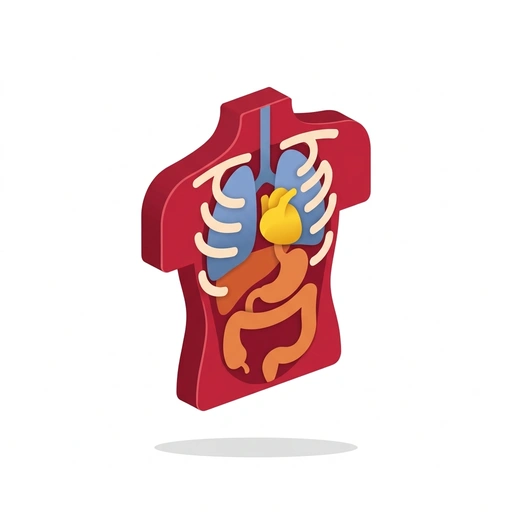
How Your Body Actually Works
Connect the everyday sensations you feel—from shivering and muscle burn to food comas—to the real anatomy and physiology behind them. Understand how your internal systems coordinate every breath, movement, and meal.
Like Duolingo, but for How Your Body Actually Works. Tomo turns the whole topic into a game you play five minutes a day, until it actually sticks.
A short one: 12 levels across 2 sections, about 24 minutes end to end, roughly 5 days at five minutes a day. It moves through Everyday Reactions Under Stress and Exertion and Fuel, Cables, and Motion. It starts from scratch.
Free forever · No credit card · iPhone & Android
Key ideas in How Your Body Actually Works
- Homeostasis acts like an active thermostat, making tiny continuous adjustments rather than locking a biological value rigidly in place
- Body temperature naturally fluctuates within a narrow, safe range around roughly 37°C (98.6°F) depending on time of day and activity
- The body coordinates multiple systems to pull vitals back toward the set point whenever they drift
- Sweat glands secrete liquid onto the skin surface to release heat
- Cooling happens because liquid sweat absorbs body heat and carries it away as it transitions into vapor (evaporation)
- When surrounding air is saturated with humidity, sweat cannot evaporate readily and trickles off without removing much heat
- Shivering is an involuntary reflex triggered by the brain when core temperature dips
- Skeletal muscles repeatedly contract and relax in rapid bursts
- Muscle contractions convert chemical energy into kinetic energy and waste heat, warming the core
- Smooth muscle rings surrounding blood vessels widen them (vasodilation) to send warm blood to the skin surface where heat can escape
- When cold, those same muscles tighten (vasoconstriction) to squeeze blood away from extremities and protect vital internal organs
- Visible skin flushing or paleness directly reflects how much blood is flowing near the surface
- Microscopic muscles connected to hair follicles contract involuntarily in cold conditions
- In dense-furred mammals, upright hairs trap a layer of still, warm air right above the skin for insulation
- In modern humans, hair is too sparse to trap meaningful air, leaving goosebumps as an evolutionary leftover reflex
- The heart is divided down the middle into two distinct pumps working at the same time
You've tried the other tabs
Thirty open tabs. Four facts you actually kept.
You watched. You nodded. By Sunday it was gone.
One answer, then back to scrolling.
Eight weeks. You meant to finish. You didn't.
Tomo gives How Your Body Actually Works the Duolingo treatment: levels, streaks, and quick quizzes that test what you just learned. That game loop is what the tabs above never had, so it's the one you actually finish.
Here's what playing it feels like
A real question from this course. Take your best guess.
What happens to a healthy person's body temperature over a normal 24-hour day?
Get it right to open this lesson and 11 more in the app.
How to learn How Your Body Actually Works, step by step
Go in order. 12 short levels across 2 sections, about 24 minutes in all, five minutes a day.
- 1
Everyday Reactions Under Stress and Exertion
- Decoding Your Internal Thermostat
- What Happens When You Sprint Upstairs
- 2
Fuel, Cables, and Motion
- The Mechanical Breakdown of a Meal
- How Bones and Muscles Pull Together
2 sections · 4 units · 12 levels. Built to play, not to enroll.
Questions about How Your Body Actually Works
How do I learn How Your Body Actually Works?
Go in order: start with Everyday Reactions Under Stress and Exertion, then Fuel, Cables, and Motion. On Tomo that's 12 short levels, about 24 minutes in all, played five minutes a day. Start free and play the first level in under a minute.
Is there a Duolingo-style app for How Your Body Actually Works?
Yes. Tomo works like Duolingo: short daily lessons, streaks and quick quizzes. How Your Body Actually Works is one of its free courses, and you can type any other topic to get a course of your own.
Is the How Your Body Actually Works course free?
Yes. How Your Body Actually Works is playable on Tomo's free plan, which doesn't expire. No credit card, no waitlist. Download the app and start your first lesson.
How long does it take to learn How Your Body Actually Works?
12 levels across 2 sections, about 24 minutes of play in total. It's built for five minutes a day, so you finish it a little at a time instead of all at once.
Do I need any background to start How Your Body Actually Works?
No. It's pitched at a beginner level, so it starts where you are and builds up. If you can tap a phone, you can start.
Tomo is in ChatGPT
Tomo is also a ChatGPT plugin: the same playable courses, built and played inside your chat.
Add Tomo to ChatGPT- What to ask
- “Make me a Tomo course on black holes.” “Turn this chat into a Tomo course.”
- What you get
- Quick questions with instant feedback, hearts and stars, ready to play in about a minute.
- Where it goes
- No sign-up to start. Connect your Tomo account and your streak carries on in the app.
You pick the voice
How Your Body Actually Works is taught in the Professor style: clear, structured, thorough. Want a different feel? In the app you can spin up the same topic in any of Tomo's teaching styles. Same facts, totally different vibe.
More Science on Tomo
How the Human Body Works
Discover the mechanical and chemical systems that keep you alive, moving, and balanced every day. Explore how bones, muscles, blood, nerves, and organs collaborate seamlessly in real time.
How the Human Body Works
Discover the incredible machinery running beneath your skin every second. Learn how your organs coordinate, why your body produces familiar everyday sensations, and what it takes to keep you moving, thinking, and alive.
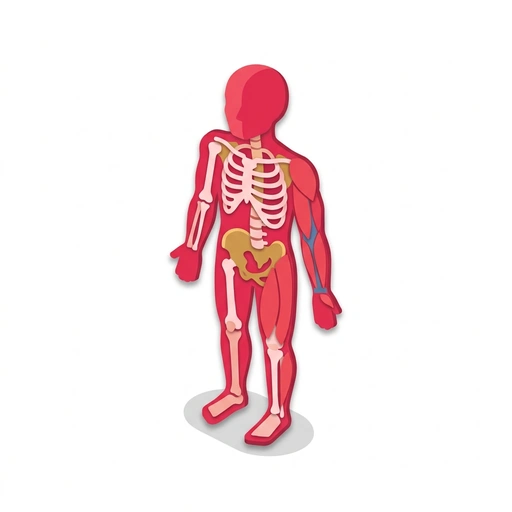
How the Human Body Works
Discover how your body functions as an interconnected living machine. Explore the mechanics of bones and muscles, the heart and lungs' oxygen highway, digestive fuel conversion, and the nervous system's command center.
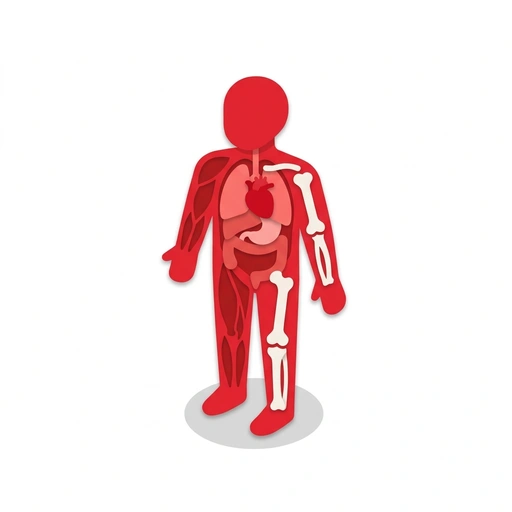
How the Human Body Works
Discover the mechanical and chemical systems that keep you alive, moving, and balanced every day. Learn how your organs coordinate under stress, how muscles pull to create motion, and how the body quietly resets itself behind the scenes.
How the Human Body Works
Discover the mechanical and chemical principles that keep your body alive and moving. Learn how organs coordinate behind the scenes, how muscles generate force, and how your system automatically balances itself.
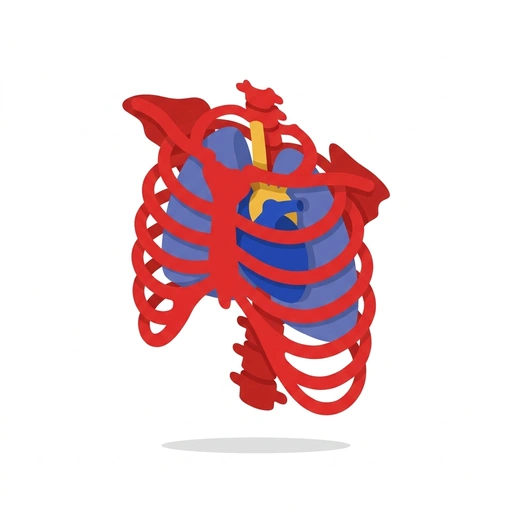
How the Human Body Works
Discover the mechanical and chemical systems keeping you alive every second. Learn how your heart, lungs, muscles, and nerves coordinate in real time to power movement and maintain vital balance.
Start How Your Body Actually Works today.
Download Tomo, search How Your Body Actually Works, and play your first lesson in under a minute.