
How Your Body Regulates Itself
Move beyond textbook anatomy to understand the real-time physiological balancing acts that keep you alive. Learn how your nervous system, metabolism, fluid dynamics, and immune defenses constantly adapt to stress and exertion.
Like Duolingo, but for How Your Body Regulates Itself. Tomo turns the whole topic into a game you play five minutes a day, until it actually sticks.
A short one: 12 levels across 2 sections, about 24 minutes end to end, roughly 5 days at five minutes a day. It moves through Managing Immediate Physical Demands and Maintaining Deep Equilibrium. It assumes you already know the basics.
Free forever · No credit card · iPhone & Android
Key ideas in How Your Body Regulates Itself
- Both autonomic branches remain continuously active, adjusting their output like a rheostat
- Basal sympathetic tone actively maintains arterial tension even during deep physical rest
- Resting organ function reflects a shifting net balance rather than an on-off toggle
- Rapid heart rate deceleration post-exercise is driven primarily by vagal reactivation
- Vagal tone acts as a dynamic brake on the intrinsic pace of the cardiac sinoatrial node
- A sluggish heart rate drop within the first minute indicates blunted parasympathetic recovery
- Selective shunting redirects fixed circulating blood volume to priority tissues within seconds
- Arteriolar smooth muscle contracts to clamp down splanchnic and renal blood vessels during arousal
- Local metabolic signals override systemic vasoconstriction in contracting skeletal muscle beds
- Inhalation prompts thoracic expansion that transiently suppresses vagal efferent activity
- Lifting the vagal brake allows the sinoatrial node to fire closer to its uninhibited pace
- Sustained catecholamines reduce peripheral insulin sensitivity to maintain free circulating glucose
- The hypothalamic-pituitary-gonadal axis is suppressed to conserve energetic resources
- Gastrointestinal mucosal repair and visceral maintenance remain deprioritized under chronic arousal
- Exhalation restores parasympathetic outflow via the vagus nerve, immediately slowing cardiac pacing
- Muscle contraction intensity, rather than workout duration, governs the metabolic crossover point
You've tried the other tabs
Thirty open tabs. Four facts you actually kept.
You watched. You nodded. By Sunday it was gone.
One answer, then back to scrolling.
Eight weeks. You meant to finish. You didn't.
Tomo gives How Your Body Regulates Itself the Duolingo treatment: levels, streaks, and quick quizzes that test what you just learned. That game loop is what the tabs above never had, so it's the one you actually finish.
Here's what playing it feels like
A real question from this course. Take your best guess.
What is the main role of basal sympathetic tone while you are asleep?
Get it right to open this lesson and 11 more in the app.
Where How Your Body Regulates Itself takes you
- 1
Managing Immediate Physical Demands
- Navigating the Autonomic Nervous System
- Fuel Selection and Metabolic Switching
- 2
Maintaining Deep Equilibrium
- Thermal Control and Fluid Dynamics
- Deploying and Resolving Inflammation
2 sections · 4 units · 12 levels. Built to play, not to enroll.
Tomo is in ChatGPT
Tomo is also a ChatGPT plugin: the same playable courses, built and played inside your chat.
Add Tomo to ChatGPT- What to ask
- “Make me a Tomo course on black holes.” “Turn this chat into a Tomo course.”
- What you get
- Quick questions with instant feedback, hearts and stars, ready to play in about a minute.
- Where it goes
- No sign-up to start. Connect your Tomo account and your streak carries on in the app.
You pick the voice
How Your Body Regulates Itself is taught in the Professor style: clear, structured, thorough. Want a different feel? In the app you can spin up the same topic in any of Tomo's teaching styles. Same facts, totally different vibe.
More Science on Tomo
How the Body Balances Itself
Discover how your body works on autopilot to keep you alive and functioning. Learn the real-time feedback loops your organs, nerves, and hormones use to regulate breathing, blood flow, hydration, and body heat.
How the Human Body Works
Discover the mechanical and chemical wonders powering your everyday life. Learn how muscles, organs, and nerves coordinate in real time to keep you moving, fueled, and alive.
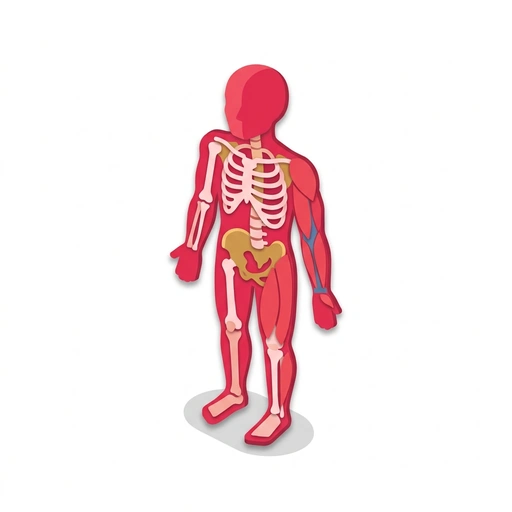
How the Human Body Works
Discover how your body functions as an interconnected living machine. Explore the mechanics of bones and muscles, the heart and lungs' oxygen highway, digestive fuel conversion, and the nervous system's command center.
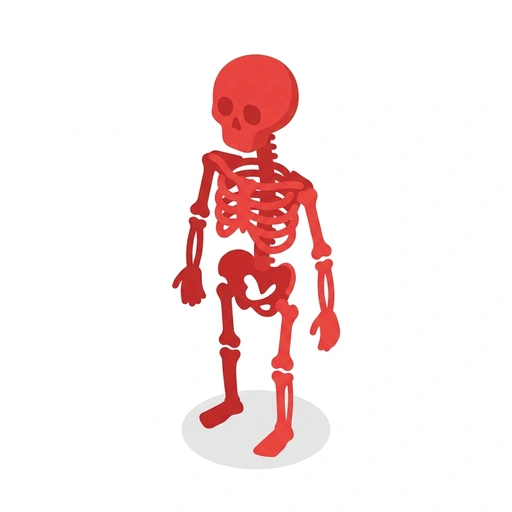
Mapping the Human Body
Discover how the living human body is built, organized, and engineered to function. Learn to read anatomical landmarks, understand how joints and muscles generate motion, and trace how internal organs coordinate life beneath your skin.
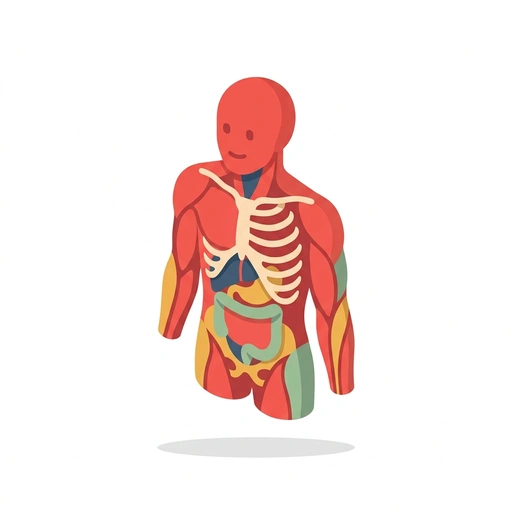
Human Anatomy and Physiology in Practice
Go beyond basic diagrams to master the functional systems of the body. Learn how physiological mechanisms drive clinical diagnosis, natural healing, and peak human performance.
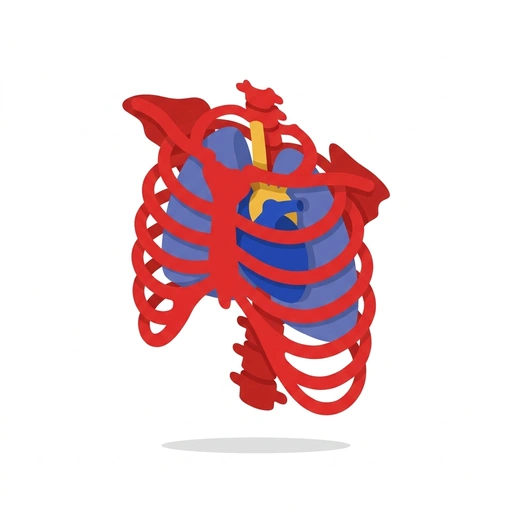
How the Human Body Works
Discover the mechanical and chemical systems keeping you alive every second. Learn how your heart, lungs, muscles, and nerves coordinate in real time to power movement and maintain vital balance.
Start How Your Body Regulates Itself today.
Download Tomo, search How Your Body Regulates Itself, and play your first lesson in under a minute.