
Mapping the Human Body
Learn to read your own physical structure using accessible bony landmarks and mechanical principles. Understand how bones, muscles, internal cavities, and vital vessels fit together into a coordinated architectural system.
Like Duolingo, but for Mapping the Human Body. Tomo turns the whole topic into a game you play five minutes a day, until it actually sticks.
A short one: 12 levels across 2 sections, about 24 minutes end to end, roughly 5 days at five minutes a day. It moves through The Skeletomuscular Framework and The Internal Architecture. It starts from scratch.
Free forever · No credit card · iPhone & Android
Key ideas in Mapping the Human Body
- The anatomical position serves as a constant universal map, standing upright with palms facing forward
- Directional terms like superior (toward the head) always describe the body's internal reference map, regardless of the patient's actual posture or movement
- Superior does not mean 'toward the sky' or 'upward relative to the room'
- Fat and muscle shift, change size with posture, or differ widely between people
- Bones close to the skin provide rigid, unmoving reference points that stay consistent across different body types
- The axial skeleton comprises the central core (skull, spine, ribs) built primarily to protect delicate organs like the brain, heart, and spinal cord
- The appendicular skeleton includes the limbs and the girdles attaching them, optimized for locomotion, reach, and manipulation
- The central pillar prioritizes stability and defense, while the outer limbs prioritize range of motion
- The outside of the body has paired limbs and features mirrored across the midline
- Single organs like the liver (mostly right side) and the spleen and stomach (mostly left side) break this symmetry inside
- Lungs and kidneys are paired organs that occupy both left and right sides
- Internal organs sit behind or align with specific surface bones that can be felt through the skin
- Palpating the bony borders (like the ribs or pelvic rim) reveals where deeper organs begin and end without needing medical imaging
- Surface skin contours alone are unreliable because soft tissues shift
- Muscle fibers can only shorten toward their center and pull on bones
- Muscles have no mechanical way to lengthen under their own power to push a bone away
You've tried the other tabs
Thirty open tabs. Four facts you actually kept.
You watched. You nodded. By Sunday it was gone.
One answer, then back to scrolling.
Eight weeks. You meant to finish. You didn't.
Tomo gives Mapping the Human Body the Duolingo treatment: levels, streaks, and quick quizzes that test what you just learned. That game loop is what the tabs above never had, so it's the one you actually finish.
Here's what playing it feels like
A real question from this course. Take your best guess.
In anatomy, what does the word "superior" always mean?
Get it right to open this lesson and 11 more in the app.
How to learn Mapping the Human Body, step by step
Go in order. 12 short levels across 2 sections, about 24 minutes in all, five minutes a day.
- 1
The Skeletomuscular Framework
- Orienting with Bony Landmarks
- How Muscles and Joints Create Movement
- 2
The Internal Architecture
- Packing the Torso's Cavities
- Tracing Conduits and Pathways
2 sections · 4 units · 12 levels. Built to play, not to enroll.
Questions about Mapping the Human Body
How do I learn Mapping the Human Body?
Go in order: start with The Skeletomuscular Framework, then The Internal Architecture. On Tomo that's 12 short levels, about 24 minutes in all, played five minutes a day. Start free and play the first level in under a minute.
Is there a Duolingo-style app for Mapping the Human Body?
Yes. Tomo works like Duolingo: short daily lessons, streaks and quick quizzes. Mapping the Human Body is one of its free courses, and you can type any other topic to get a course of your own.
Is the Mapping the Human Body course free?
Yes. Mapping the Human Body is playable on Tomo's free plan, which doesn't expire. No credit card, no waitlist. Download the app and start your first lesson.
How long does it take to learn Mapping the Human Body?
12 levels across 2 sections, about 24 minutes of play in total. It's built for five minutes a day, so you finish it a little at a time instead of all at once.
Do I need any background to start Mapping the Human Body?
No. It's pitched at a beginner level, so it starts where you are and builds up. If you can tap a phone, you can start.
Tomo is in ChatGPT
Tomo is also a ChatGPT plugin: the same playable courses, built and played inside your chat.
Add Tomo to ChatGPT- What to ask
- “Make me a Tomo course on black holes.” “Turn this chat into a Tomo course.”
- What you get
- Quick questions with instant feedback, hearts and stars, ready to play in about a minute.
- Where it goes
- No sign-up to start. Connect your Tomo account and your streak carries on in the app.
You pick the voice
Mapping the Human Body is taught in the Professor style: clear, structured, thorough. Want a different feel? In the app you can spin up the same topic in any of Tomo's teaching styles. Same facts, totally different vibe.
More Science on Tomo
Reading Human Anatomy
Move beyond isolated muscle names to understand how the body organizes space, transfers force, and routes vital plumbing. Learn to navigate the living blueprint using landmarks, compartments, and kinetic chains.
Mapping Your Own Body
Learn basic human anatomy by reading the physical landmarks, levers, and cavities of your own living frame. Discover how bones act as structural bridges, why muscles work strictly in pulling pairs, and where your vital organs actually sit.
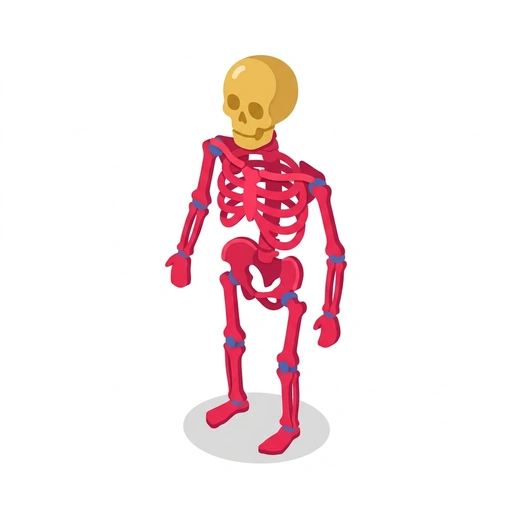
How the Human Body Fits Together
Move beyond memorizing isolated bones and organs to understand how your body is engineered. Learn the mechanical tradeoffs, vascular highways, and pressure chambers that keep everything working.
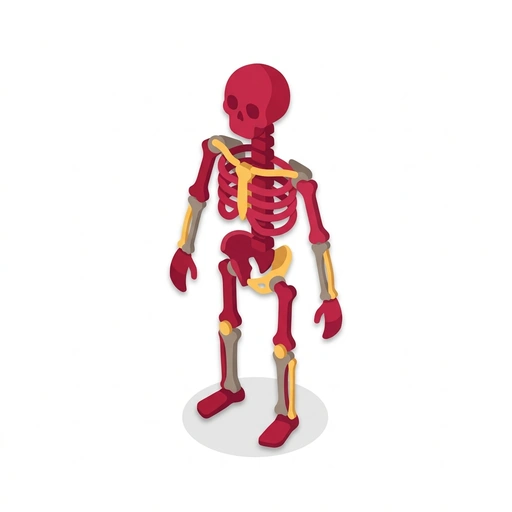
How the Human Body Fits Together
Explore the elegant architecture of your own body from the inside out. Learn how your skeleton, muscles, circulation, and vital organs coordinate to keep you upright, moving, and alive.
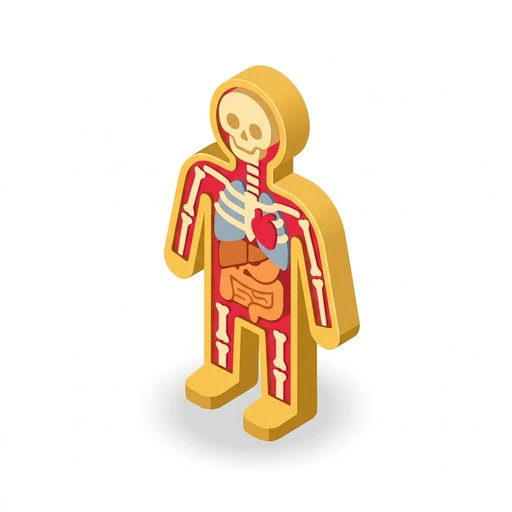
Anatomy of the Human Body
Discover how your bones, muscles, and internal systems coordinate every breath and step. Understand the physical machinery that powers daily movement, circulation, and sensation.
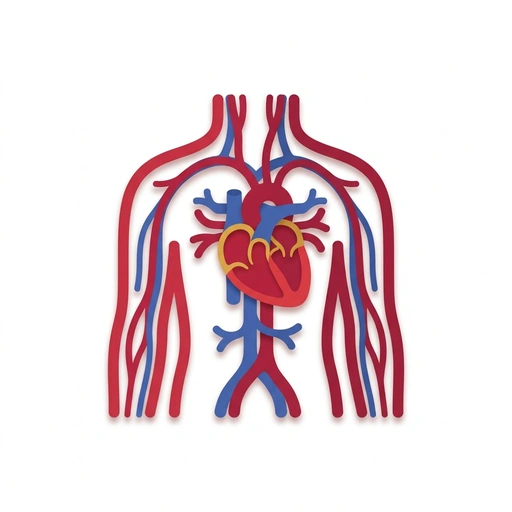
How the Body Fits Together
Move beyond isolated memorization to understand the structural logic, mechanical levers, and pressurized systems of human anatomy. Discover how bones, muscles, nerves, and organs work as interconnected architectural units in a living body.
Start Mapping the Human Body today.
Download Tomo, search Mapping the Human Body, and play your first lesson in under a minute.