
Pilates Biomechanics and Applied Cueing
Refine your instruction with neuromuscular cueing, precise joint mechanics, and structural modifications across the 34 classical mat exercises. Learn how to diagnose movement faults instantly, adapt routines for diverse physical profiles, and architect seamless, high-retention class flows.
Like Duolingo, but for Pilates Biomechanics and Applied Cueing. Tomo turns the whole topic into a game you play five minutes a day, until it actually sticks.
A deep dive: 40 levels across 5 sections, about 80 minutes end to end, roughly 16 days at five minutes a day. It moves through Neuromuscular Cueing and Somatic Visualizations; Biomechanical Dynamics of the Classical 34; Pathology-Specific Modifications and Structural Adaptations; Class Architecture, Flow, and Programming Strategy; and Kinetic Chains, Myofascial Continuity, and Somatic Mastery.
Free forever · No credit card · iPhone & Android
Key ideas in Pilates Biomechanics and Applied Cueing
- Internal anatomical cues trigger antagonistic co-contraction and disrupt natural spinal flexion
- External spatial cues rely on automatic motor recruitment to reduce hip-flexor gripping
- Motor efficiency increases when intent is organized around an environmental trajectory
- Axial elongation metaphors pretension deep fascial slings without hyper-depressing scapulae
- Direct commands to pull shoulders down reduce functional subacromial space
- Pre-loading decompression stabilizes joints through reciprocal tension rather than compression
- Anticipatory gripping occurs when a mover braces muscles in anticipation of a challenging leverage shift rather than organizing dynamically through breath
- Linking the inhalation or exhalation to an external visual landmark or spatial vector directs kinetic energy away from vulnerable hinge points (like the lumbar spine or anterior shoulder)
- Internal anatomical cues that direct attention to specific muscles (such as 'pull the navel to spine' or 'squeeze the abs') trigger antagonistic co-contraction and disrupt natural intersegmental spinal flexion
- Kinesthetic anchoring couples diaphragmatic descent or pelvic floor recoil with environmental coordinates to sustain eccentric control
- Axial elongation metaphors cueing bidirectional length between the crown and tail pretension the deep stabilizing fascial slings without causing hyper-depressed, rigid scapular positioning
- The cue decay principle dictates that verbal instructions must rapidly attenuate in word count as movement fluency increases, preventing cognitive interference during high-velocity or continuous transitions
- Initial setup requires descriptive spatial trajectories to set kinematic parameters; once initiated, verbal guidance must shrink to telegraphic touchpoints (e.g., 'reach', 'curl')
- Defensive bracing typically stems from anatomical cues that direct attention to prime movers, inducing protective cocontraction in superficial muscles (gluteus maximus, lumbar erectors)
- Pivoting to a visual vector (e.g., laser knees stretching the thigh) de-emphasizes local muscular effort and organizes the kinetic chain through distal intention
- Proprioceptive and auditory sensory metaphors (e.g., molten gold sliding, quiet breath melting the ribcage) downregulate sympathetic tone and permit isolated hip extension without compensatory lumbar extension
You've tried the other tabs
Thirty open tabs. Four facts you actually kept.
You watched. You nodded. By Sunday it was gone.
One answer, then back to scrolling.
Eight weeks. You meant to finish. You didn't.
Tomo gives Pilates Biomechanics and Applied Cueing the Duolingo treatment: levels, streaks, and quick quizzes that test what you just learned. That game loop is what the tabs above never had, so it's the one you actually finish.
Here's what playing it feels like
A real question from this course. Take your best guess.
During a Roll Up, your client hinges backward as one rigid block. Which cue best frees up their movement?
Get it right to open this lesson and 39 more in the app.
How to learn Pilates Biomechanics and Applied Cueing, step by step
Go in order. 40 short levels across 5 sections, about 1 hour 20 minutes in all, five minutes a day.
- 1
Neuromuscular Cueing and Somatic Visualizations
- Directing Kinetic Intent: External Focus and Spatial Metaphor
- Respiratory Mechanics: Breath as a Biomechanical Stabilizer
- 2
Biomechanical Dynamics of the Classical 34
- Supine Flexion, Articulation, and the Deep Abdominal Wall
- Prone Chains, Axial Extension, and Posterior Slings
- Inversion, Spinal Torsion, and Multi-Planar Control
- Lateral Stability and Complex Weight-Bearing Balances
- 3
Pathology-Specific Modifications and Structural Adaptations
- Spinal Pathologies: Disc Lesions, Spondylolisthesis, and Deviations
- Lower Quadrant Mechanics: Hip, Knee, and Sacroiliac Adaptations
- Upper Quadrant Adaptations: Shoulder Complex and Cervical Spine
- 4
Class Architecture, Flow, and Programming Strategy
- The Classical 34: Structural Logic, Synergy, and Deviation
- Multi-Level Class Architecture and Strategic Programming
- 5
Kinetic Chains, Myofascial Continuity, and Somatic Mastery
- Myofascial Slings and Tensegrity in Mat Practice
- Applied Tactile Cueing and Somatic Feedback Loops
5 sections · 13 units · 40 levels. Built to play, not to enroll.
Questions about Pilates Biomechanics and Applied Cueing
How do I learn Pilates Biomechanics and Applied Cueing?
Go in order: start with Neuromuscular Cueing and Somatic Visualizations, then Biomechanical Dynamics of the Classical 34, then Pathology-Specific Modifications and Structural Adaptations, then Class Architecture, Flow, and Programming Strategy, and 1 more section after that. On Tomo that's 40 short levels, about 1 hour 20 minutes in all, played five minutes a day. Start free and play the first level in under a minute.
Is there a Duolingo-style app for Pilates Biomechanics and Applied Cueing?
Yes. Tomo works like Duolingo: short daily lessons, streaks and quick quizzes. Pilates Biomechanics and Applied Cueing is one of its free courses, and you can type any other topic to get a course of your own.
Is the Pilates Biomechanics and Applied Cueing course free?
Yes. Pilates Biomechanics and Applied Cueing is playable on Tomo's free plan, which doesn't expire. No credit card, no waitlist. Download the app and start your first lesson.
How long does it take to learn Pilates Biomechanics and Applied Cueing?
40 levels across 5 sections, about 1 hour 20 minutes of play in total. It's built for five minutes a day, so you finish it a little at a time instead of all at once.
Do I need any background to start Pilates Biomechanics and Applied Cueing?
No. It's pitched at an advanced level, so it starts where you are and builds up. If you can tap a phone, you can start.
Tomo is in ChatGPT
Tomo is also a ChatGPT plugin: the same playable courses, built and played inside your chat.
Add Tomo to ChatGPT- What to ask
- “Make me a Tomo course on black holes.” “Turn this chat into a Tomo course.”
- What you get
- Quick questions with instant feedback, hearts and stars, ready to play in about a minute.
- Where it goes
- No sign-up to start. Connect your Tomo account and your streak carries on in the app.
You pick the voice
Pilates Biomechanics and Applied Cueing is taught in the Professor style: clear, structured, thorough. Want a different feel? In the app you can spin up the same topic in any of Tomo's teaching styles. Same facts, totally different vibe.
More Health on Tomo
The Mechanics of Mat Pilates
Deepen your Pilates practice by decoding the muscle mechanics, joint kinematics, and alignment strategies behind classical mat work. Learn to identify subtle compensations, adjust lever lengths, and cue precise core stability for lasting functional strength.
Functional Anatomy for Stott Pilates
Connect muscle origins, insertions, and fiber angles directly to the biomechanics of contemporary Pilates. Learn how local stabilizers and global movers govern neutral alignment, imprint, and precision cueing.
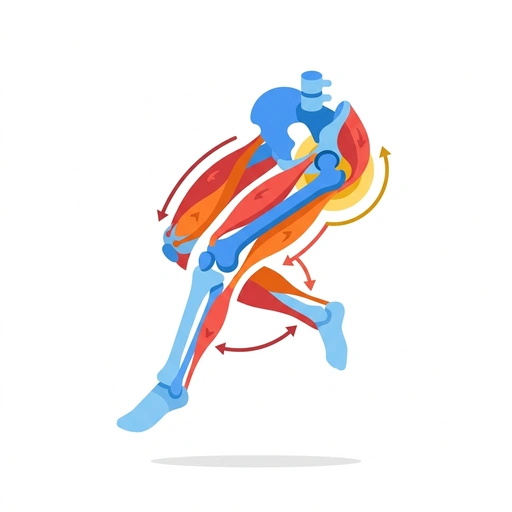
Anatomy for Pilates Professionals
Bridge the gap between textbook anatomy and the moving body. Master the musculoskeletal relationships that drive core stability, spinal articulation, and efficient movement patterns in your clients.
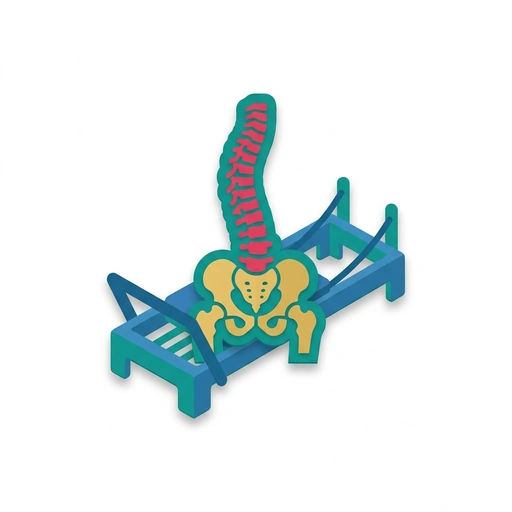
Pilates Biomechanics and Anatomy
Understand the musculoskeletal machinery and physiological reflexes that power Pilates. Learn how joint mechanics, myofascial slings, and spring physics transform classic exercises from rote choreography into targeted physical conditioning.
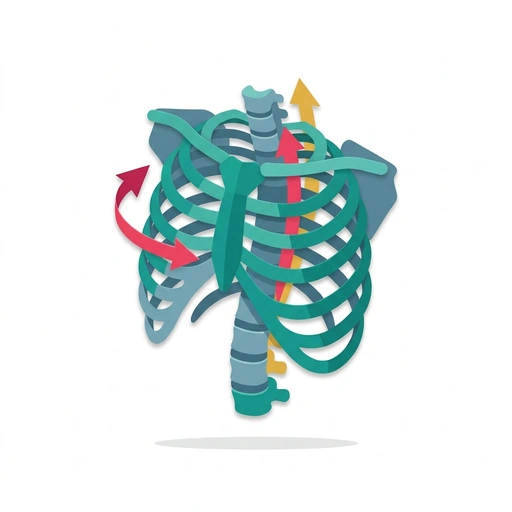
Pilates Anatomy in Motion
Look past generic cues and uncover the biomechanics behind every roll, reach, and teaser. Learn how deep stabilizers, myofascial slings, and joint mechanics work together to build effortless, injury-free movement.
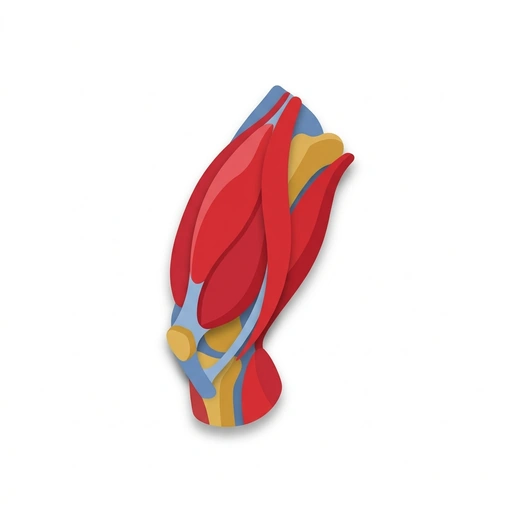
Functional Anatomy for Pilates
Bridge structural anatomy and practical movement analysis for Pilates instruction. Learn the origins, insertions, and coordinated actions of the major muscle groups that govern spinal articulation, pelvic stability, and full-body movement.
Start Pilates Biomechanics and Applied Cueing today.
Download Tomo, search Pilates Biomechanics and Applied Cueing, and play your first lesson in under a minute.