
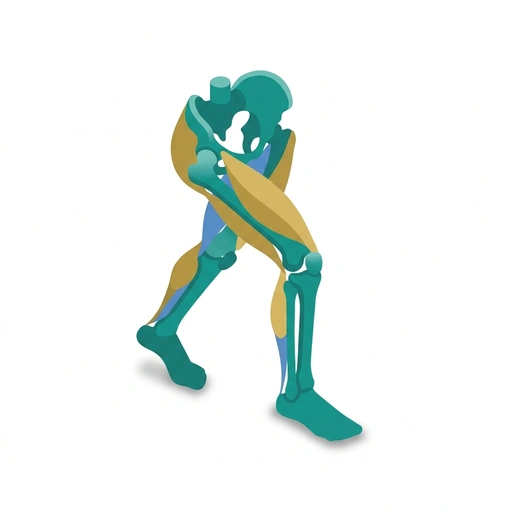
Functional Anatomy in Motion
Learn how bones, joints, and muscles coordinate to generate force, prevent injury, and heal common aches. Build practical anatomical awareness to upgrade your training, fix faulty movement patterns, and take control of your physical health.
Like Duolingo, but for Functional Anatomy in Motion. Tomo turns the whole topic into a game you play five minutes a day, until it actually sticks.
A deep dive: 51 levels across 5 sections, about 102 minutes end to end, roughly 20 days at five minutes a day. It moves through First Moves: How the Body Generates Safe Force; The Lower Chain: Hips, Knees, and Ankles; The Upper Chain: Shoulders, Scapulae, and Spine; The Core and Force Transfer: Moving as One System; and Assessment, Pain, and Long-Term Adaptation. It starts from scratch.
Free forever · No credit card · iPhone & Android

Key ideas in Functional Anatomy in Motion
- Everyday human tasks map directly to foundational movement patterns
- Squatting brings the body down and up through deep knee and hip bend, while hinging folds primarily at the hips to reach downward
- Pulling brings an object toward the torso or the torso toward an anchor, while carrying stabilizes weight while traveling
- A hinge pushes the pelvis backward with soft, relatively vertical shins and minimal forward knee travel
- A squat drops the pelvis downward by bending the knees and hips simultaneously
- Turning a hinge into a squat alters which muscles carry the load, shifting work away from the glutes and hamstrings
- A neutral spine preserves the natural, gentle inward curve of the lower back and neck
- Forcing the spine into a completely flat or poker-straight line flattens natural shock-absorbing curves and strains spinal structures under load
- Neutral means maintaining these natural curves dynamically rather than letting the spine buckle into extreme flexion or over-extension
- Bracing pushes the abdominal wall outward in 360 degrees to create internal pressure that splints the lumbar spine
- Sucking the belly button in (hollowing) narrows the base of support and produces far less stiffness against heavy external loads
- Stiffening the torso like a solid cylinder prevents shearing forces on the lower back
- The foot tripod consists of three specific contact points: the heel, the base of the big toe, and the base of the pinky toe
- Distributing weight across these three points keeps the arch naturally supported without collapsing inward or rolling outward
- A stable tripod foot creates a solid foundation that prevents the ankles from rolling and the knees from caving in
- The gluteus maximus is the largest and most powerful hip extender in the human body
You've tried the other tabs
Thirty open tabs. Four facts you actually kept.
You watched. You nodded. By Sunday it was gone.
One answer, then back to scrolling.
Eight weeks. You meant to finish. You didn't.
Tomo gives Functional Anatomy in Motion the Duolingo treatment: levels, streaks, and quick quizzes that test what you just learned. That game loop is what the tabs above never had, so it's the one you actually finish.
Here's what playing it feels like
A real question from this course. Take your best guess.
What is the main difference between a squat and a hip hinge?
Get it right to open this lesson and 50 more in the app.
How to learn Functional Anatomy in Motion, step by step
Go in order. 51 short levels across 5 sections, about 1 hour 42 minutes in all, five minutes a day.
- 1
First Moves: How the Body Generates Safe Force
- The Foundational Human Movement Archetypes
- The Hip Hinge and Posterior Chain Mechanics
- 2
The Lower Chain: Hips, Knees, and Ankles
- Knee Tracking and Lateral Hip Stability
- Ankle Mobility and Foot Architecture
- 3
The Upper Chain: Shoulders, Scapulae, and Spine
- Shoulder Mechanics and Scapular Rhythm
- Thoracic Extension and Neck Mechanics
- Elbow, Wrist, and Grip Mechanics
- 4
The Core and Force Transfer: Moving as One System
- The 360-Degree Core Cylinder
- Fascial Slings and Whole-Body Chains
- Gait Architecture and Human Locomotion
- 5
Assessment, Pain, and Long-Term Adaptation
- Decoding Pain, Soreness, and Tissue Signals
- Flexibility, Mobility, and Motor Control
- Regressing and Adapting Movements for Recovery
5 sections · 13 units · 51 levels. Built to play, not to enroll.
Questions about Functional Anatomy in Motion
How do I learn Functional Anatomy in Motion?
Go in order: start with First Moves: How the Body Generates Safe Force, then The Lower Chain: Hips, Knees, and Ankles, then The Upper Chain: Shoulders, Scapulae, and Spine, then The Core and Force Transfer: Moving as One System, and 1 more section after that. On Tomo that's 51 short levels, about 1 hour 42 minutes in all, played five minutes a day. Start free and play the first level in under a minute.
Is there a Duolingo-style app for Functional Anatomy in Motion?
Yes. Tomo works like Duolingo: short daily lessons, streaks and quick quizzes. Functional Anatomy in Motion is one of its free courses, and you can type any other topic to get a course of your own.
Is the Functional Anatomy in Motion course free?
Yes. Functional Anatomy in Motion is playable on Tomo's free plan, which doesn't expire. No credit card, no waitlist. Download the app and start your first lesson.
How long does it take to learn Functional Anatomy in Motion?
51 levels across 5 sections, about 1 hour 42 minutes of play in total. It's built for five minutes a day, so you finish it a little at a time instead of all at once.
Do I need any background to start Functional Anatomy in Motion?
No. It's pitched at a beginner level, so it starts where you are and builds up. If you can tap a phone, you can start.
Tomo is in ChatGPT
Tomo is also a ChatGPT plugin: the same playable courses, built and played inside your chat.
Add Tomo to ChatGPT- What to ask
- “Make me a Tomo course on black holes.” “Turn this chat into a Tomo course.”
- What you get
- Quick questions with instant feedback, hearts and stars, ready to play in about a minute.
- Where it goes
- No sign-up to start. Connect your Tomo account and your streak carries on in the app.
You pick the voice
Functional Anatomy in Motion is taught in the Professor style: clear, structured, thorough. Want a different feel? In the app you can spin up the same topic in any of Tomo's teaching styles. Same facts, totally different vibe.
More Health on Tomo
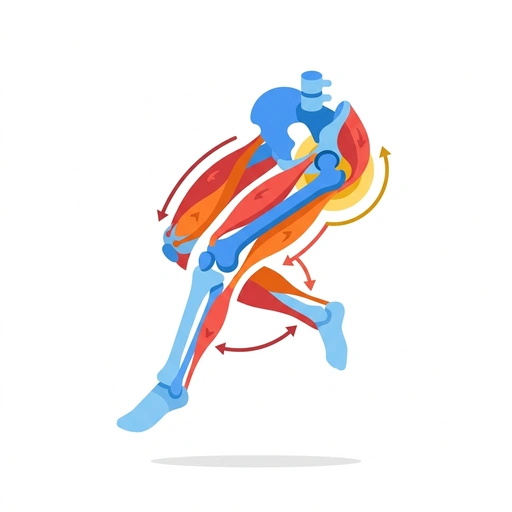
Anatomy for Pilates Professionals
Bridge the gap between textbook anatomy and the moving body. Master the musculoskeletal relationships that drive core stability, spinal articulation, and efficient movement patterns in your clients.
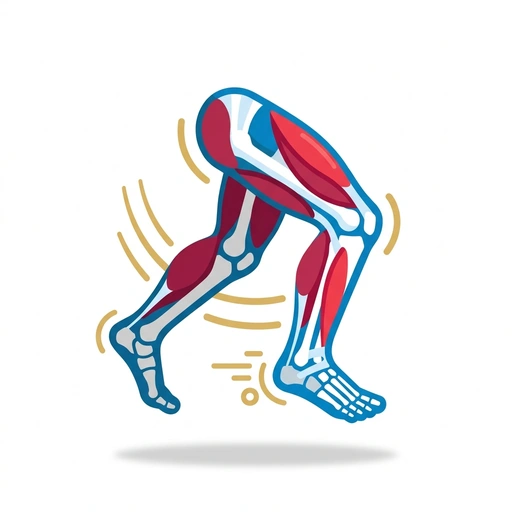
Functional Anatomy in Motion
Move beyond static muscle charts to understand how bones, joints, and myofascial systems coordinate real human movement. Learn how kinetic chains transfer force, why joint centration protects tissues, and how to spot subtle movement compensations in action.
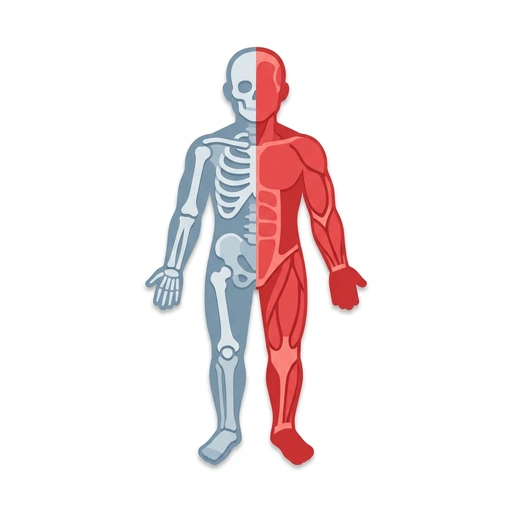
Musculoskeletal Anatomy in Motion
Bridge the gap between memorizing bone names and understanding how the living body generates force and stabilizes joints. Explore the mechanical levers, dynamic force couples, and tissue adaptations that govern human movement and physical resilience.
Anatomy for Pilates Movement
Understand the functional anatomy behind classic Pilates exercises and cues. Learn how the deep core, spine, and joint stabilizers work together to guide safe, effective movement.
Anatomy for Pilates Movement
Bridge the gap between textbook anatomy and movement instruction. Understand joint mechanics, muscular lines of pull, and functional compensations across the classic and contemporary Pilates repertoire.
Pilates Anatomy in Motion
Look past generic cues and uncover the biomechanics behind every roll, reach, and teaser. Learn how deep stabilizers, myofascial slings, and joint mechanics work together to build effortless, injury-free movement.
Start Functional Anatomy in Motion today.
Download Tomo, search Functional Anatomy in Motion, and play your first lesson in under a minute.