
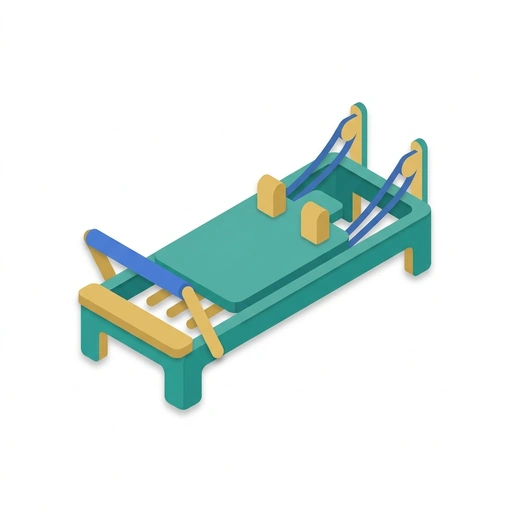
Reformer Pilates: Movement and Machine
Learn how the Pilates reformer works with your body to build core strength, length, and balance. Decode common studio cues, master machine mechanics, and execute signature exercises with control.
Like Duolingo, but for Reformer Pilates: Movement and Machine. Tomo turns the whole topic into a game you play five minutes a day, until it actually sticks.
24 levels across 4 sections, about 48 minutes end to end, roughly 10 days at five minutes a day. It moves through Getting on the Machine, Translating Cues into Core Control, Limb Integration and Spinal Articulation, and Resistance Dynamics and Balance. It starts from scratch.
Free forever · No credit card · iPhone & Android
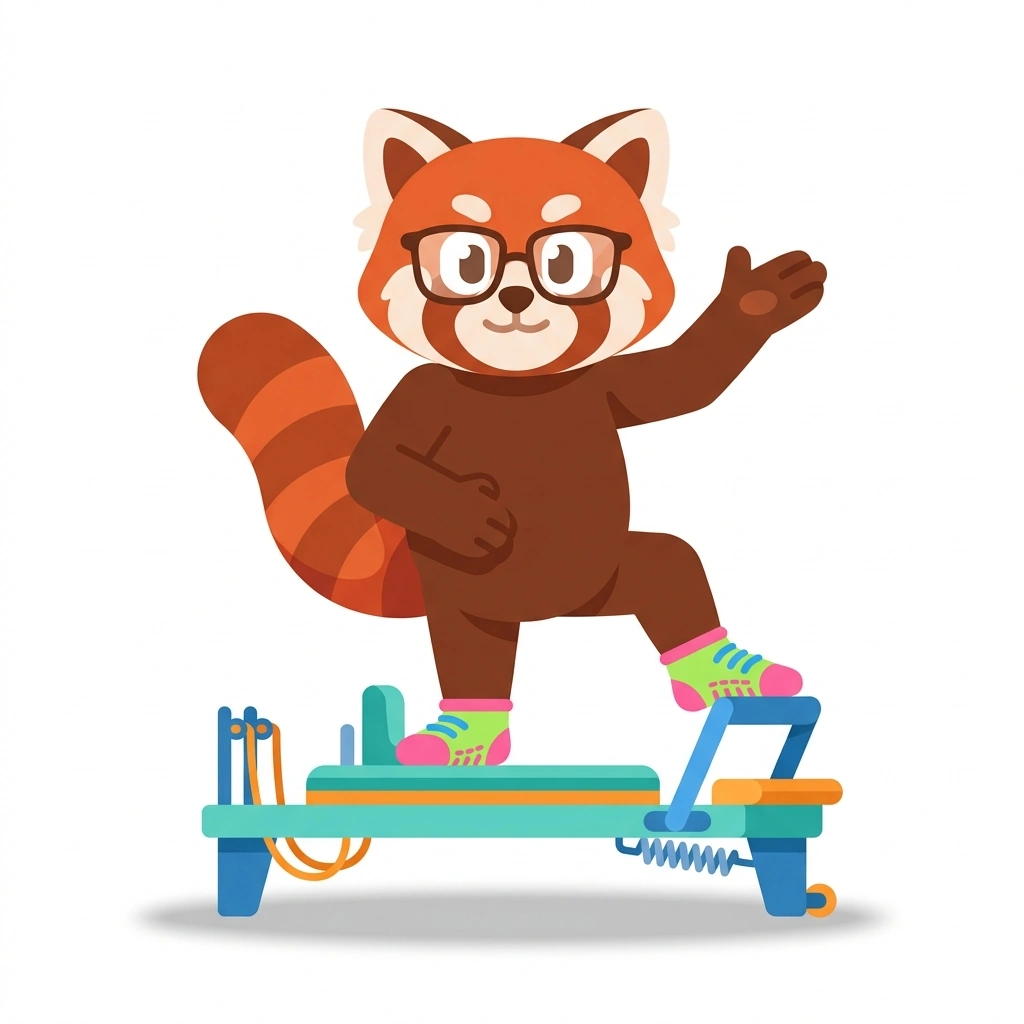
Key ideas in Reformer Pilates: Movement and Machine
- A floor mat stays still even if you lean to one side
- The Reformer carriage rolls under uneven pressure, exposing body wobbles instantly
- The standing platform is bolted down and cannot slide
- Mounting the sliding carriage first risks having it shoot out beneath you
- Always transfer weight to the moving carriage only after anchoring to a solid base
- Headrest and footbar positions align joint angles to fit long or short limbs
- Adjusting the footbar is about matching your bone length, not testing how deep you can stretch
- The headrest elevates or flattens to keep the neck in line with the spine
- Short loops reduce rope slack, giving arms proper tension and control
- Long loops accommodate the longer reach and travel of legs without changing springs
- Switching loops changes your leverage while keeping the spring load the same
- A carriage with zero springs attached slides freely with zero resistance
- Sitting or kneeling on an unhooked carriage can cause it to roll away abruptly
- Always confirm at least one spring is fully hooked into the gear bar
- Footwork lets you check and fix your body's symmetry while lying down and supported
- It establishes neutral joint stacking before moving into unstable or complex exercises
You've tried the other tabs
Thirty open tabs. Four facts you actually kept.
You watched. You nodded. By Sunday it was gone.
One answer, then back to scrolling.
Eight weeks. You meant to finish. You didn't.
Tomo gives Reformer Pilates: Movement and Machine the Duolingo treatment: levels, streaks, and quick quizzes that test what you just learned. That game loop is what the tabs above never had, so it's the one you actually finish.
Here's what playing it feels like
A real question from this course. Take your best guess.
Why does an exercise often feel more challenging on the Reformer carriage than on a floor mat?
Get it right to open this lesson and 23 more in the app.
Where Reformer Pilates: Movement and Machine takes you
- 1
Getting on the Machine
- Stepping On and Setting Up
- The Footwork Foundation
- 2
Translating Cues into Core Control
- Deciphering Studio Cues and Pelvic Position
- Center-Driven Moves: The Hundred and Box Work
- 3
Limb Integration and Spinal Articulation
- Working in the Straps
- Spinal Articulation and Bridging
- 4
Resistance Dynamics and Balance
- Understanding Spring Physics and Tension
- Lunges, Balance, and Standing Precision
4 sections · 8 units · 24 levels. Built to play, not to enroll.
You pick the voice
Reformer Pilates: Movement and Machine is taught in the The Professor style: clear, structured, thorough. Want a different feel? In the app you can spin up the same topic in any of Tomo's teaching styles. Same facts, totally different vibe.
More Health on Tomo
Reformer Pilates Anatomy and Alignment
Learn the essential biomechanics, cueing principles, and joint safety rules needed for Reformer Pilates. Master pelvic alignment, core activation, and exercise modifications for special populations.
Pilates Anatomy in Action
Understand the real muscles and mechanics behind classic Pilates cues. Learn how your core, spine, and breath interact so every mat exercise feels lighter, safer, and far more effective.
Pilates Anatomy: The Body in Motion
Understand how your muscles and bones work together to create the strength and control that defines Pilates. Learn to move from your center and protect your spine with every breath.
Mat Pilates: Movement and Anatomy
Discover the anatomical logic and precise movements of classical mat Pilates. Learn how to activate your powerhouse, articulate your spine, and build lasting core stability from the floor up.
Pilates Biomechanics and Anatomy
Understand the musculoskeletal machinery and physiological reflexes that power Pilates. Learn how joint mechanics, myofascial slings, and spring physics transform classic exercises from rote choreography into targeted physical conditioning.
Anatomy for Pilates Movement
Bridge the gap between textbook anatomy and movement instruction. Understand joint mechanics, muscular lines of pull, and functional compensations across the classic and contemporary Pilates repertoire.
Start Reformer Pilates: Movement and Machine today.
Download Tomo, search Reformer Pilates: Movement and Machine, and play your first lesson in under a minute.